Si solo das cuenta del afán y los éxitos, darás cuenta del costo. No hay victoria sin precio, ni altar sin fuego.
Tu ganancia es temporal, tus victorias, resplandores que se apagan en el vacío. Impones tu voluntad, pero la muerte toca sin sutileza.
Aunque no lo hayas escuchado antes, en el momento final escucharás el monólogo de Roy Batty en Blade Runner:
"Yo he visto cosas que vosotros no creeríais. Naves de ataque en llamas más allá del hombro de Orión. He visto rayos-C brillar en la oscuridad cerca de la Puerta de Tannhäuser. Todos esos momentos se perderán en el tiempo, como lágrimas en la lluvia."
Salomé ha pedido todas las cabezas, incluso la del festejado. Danzas la pavesa sobre el rescoldo de la hoguera.
Puso el mundo a tus pies, te sació con el hambre, te lanzó desde las cimas, y luego te dejó caer.
Sin un solo esplendor, polvo acaso.
No se apura, tiene todas las cartas.
Su reino es distorsión y olvido, sin réplica, sin disputa.
Si en oro has puesto tu afán, si en el mundo anclas tu vida, en sombra se van. Mira las cenizas, las mide.
Sin apuro, sin error, su victoria casi perfecta.
Por Él todo fue creado.
El hombro de Orión fue un gesto de amor. No hay oscuridad cerca de la Puerta de Tannhäuser. Todos esos momentos han pasado, pero en Él todo es abundante y no conoce muerte.
Hasta las lágrimas en la lluvia serán restauradas.
En lo mudable todo es pasajero, solo el amor atraviesa la fatalidad.
Perdona nuestras deudas, porque hemos perdonado, y líbranos en el desierto de las tentaciones.
No solo de pan vive el hombre, sino del pan de vida que habita entre nosotros.
Él ha vencido a las tentaciones de este mundo, a la muerte.
Vivimos en una época en la que las palabras han perdido su significado original. Se siguen utilizando con la misma solemnidad que en el siglo XX, pero su contenido ha sido vaciado o, peor aún, transformado en algo completamente distinto sin que la mayoría de la gente lo note. Una de esas palabras es democracia.
Los mapas del mundo siguen pintando ciertos países de azul, etiquetándolos como “democracias plenas”, como si ese título todavía tuviera el peso que alguna vez tuvo. Nos dicen que estos lugares defienden la libertad, la transparencia y la autodeterminación. Pero basta con viajar a esos países y ver la realidad con nuestros propios ojos para darnos cuenta de que la democracia que se predica no es la que se practica.
Tomemos a Canadá, por ejemplo, un país presentado como la cima de la democracia, pero que ha evolucionado en un estado de vigilancia. Las protestas de los camioneros en 2022 demostraron lo fácil que es para un gobierno democrático congelar cuentas bancarias, monitorear a sus ciudadanos y restringir libertades básicas con un simple decreto de emergencia. No fueron las acciones de una fuerza clandestina, ni de un régimen autoritario operando en las sombras. Fue el propio gobierno “democrático” quien lo hizo, sin la menor contradicción interna.
Australia no es diferente. Allí, el Estado tiene control absoluto sobre la vida privada a través de la tecnología, la tributación y la regulación del discurso público. La intolerancia académica y la censura en redes sociales son moneda corriente. Suecia, otro país clasificado como democracia plena, sigue un modelo similar: un sistema donde el Estado regula cada aspecto de la vida hasta el punto de un cuasi-totalitarismo, todo en nombre de la igualdad y la seguridad social.
Entonces, cuando hablamos de democracia plena, ¿de qué estamos hablando realmente?
¿Se trata simplemente del derecho a votar? ¿Se trata de poder elegir entre opciones preaprobadas en un sistema que, en muchos casos, ya ha decidido el curso de la política independientemente de la voluntad del pueblo? ¿Se trata de libertad de expresión, cuando esa libertad es censurada de facto a través de regulaciones, listas negras y linchamientos digitales?
¿Estamos confundiendo democracia con igualdad forzada, una igualdad que no eleva a las personas, sino que las aplana y las somete?
Estas son las preguntas que debemos hacernos a medida que el mundo se reorganiza en estados cada vez más intolerantes, más autoritarios y más vigilados.
Porque si democracia plena significa vivir bajo la supervisión constante de un Estado que dicta lo que podemos decir, pensar y hacer, entonces la democracia del siglo XXI ya no es la del siglo XX.
Hoy en día, nadie está realmente fuera del sistema de vigilancia. Cualquiera que use un teléfono, televisión, internet o redes sociales es monitoreado de una u otra forma. Cada búsqueda, cada compra, cada opinión expresada en una plataforma digital es registrada, analizada y, si es necesario, corregida o eliminada.
La única forma de escapar de esta red de control, en algunos países, es literalmente desaparecer del sistema. Esto es lo que llaman vivir fuera de la red (off the grid). Y los únicos que realmente viven fuera de la red son los indigentes, aquellos que han abandonado por completo la estructura del mundo moderno.
Pero optar por entrar o salir de la vigilancia ya no es una opción. En este nuevo orden, los algoritmos ya han colocado en ti la marca del esclavo.
Tu rostro está registrado, tu voz ha sido analizada, tu historial de compras ha sido procesado, tus opiniones han sido clasificadas y etiquetadas.
Tus pensamientos han sido reducidos a un perfil digital, a un modelo predictivo de quién eres, qué harás y qué te hará reaccionar.
¿Quién es tu amo?
Es la pregunta que nadie se atreve a hacer. Porque en un mundo donde la libertad se ha convertido en una simulación y la esclavitud es voluntaria, nadie quiere mirar demasiado de cerca el sello que ya lleva marcado en la frente.
Estados Fallidos, Tiranías Digitales y el Nuevo Orden de Control
Cuando observamos países como Venezuela, Cuba y Nicaragua, vemos algo que va más allá de una simple dictadura. No se trata solo de regímenes autoritarios; son estados fallidos, pero con una dimensión adicional: una simbiosis con la delincuencia, una profunda complicidad con el crimen organizado y una tolerancia tácita por parte de las llamadas democracias plenas del mundo.
La opresión en estos lugares es más salvaje, más primitiva. No depende de tecnología sofisticada ni de redes de vigilancia avanzadas, sino de violencia cruda, miedo y el colapso absoluto de las instituciones. Estos regímenes no funcionan como estados modernos, sino como feudos, donde el imperio de la ley ha sido reemplazado por la ley de la fuerza. El Estado y el crimen organizado son indistinguibles: milicias, pandillas y fuerzas de seguridad del gobierno operan de manera intercambiable, creando un ecosistema en el que el control no se ejerce únicamente desde arriba, sino que se difunde en cada aspecto de la vida diaria a través de la intimidación, los informantes y las represalias brutales.
Pero estos son métodos antiguos de control—la opresión como se hacía en el pasado, donde el poder se mantenía por pura brutalidad. Esto no es China.
El Partido Comunista Chino (PCC) ha evolucionado hacia algo mucho más sofisticado. No gobierna simplemente a través del miedo—gobierna con precisión, con inteligencia artificial, con la integración absoluta de la tecnología en la administración del Estado. El PCC ha desarrollado un totalitarismo digital que castiga, vigila y recompensa a sus ciudadanos con eficiencia matemática. Ya no es una dictadura de hombres, sino de algoritmos.
El Sistema de Crédito Social es el mejor ejemplo de ello: un mecanismo a través del cual toda la población es clasificada, monitoreada y condicionada a comportarse de manera que beneficie al Estado. A través del reconocimiento facial, el rastreo financiero y el análisis basado en inteligencia artificial, el gobierno decide quién tiene acceso a oportunidades y quién es marginado de la sociedad. El disenso no solo es castigado; es sistemáticamente borrado. El modelo es aterrador porque se refuerza a sí mismo: quienes se adaptan son recompensados, mientras que quienes resisten son eliminados del sistema. El objetivo no es solo la obediencia, sino una sociedad donde la desobediencia ni siquiera sea una posibilidad.
Y, sin embargo, en las democracias occidentales, ha surgido otra forma de control—menos visible, menos brutal, pero igualmente efectiva.
En los Estados Unidos, las personas en la cima del sistema no son controladas por la policía ni por agentes del Estado, sino por el crédito.
Los sistemas financieros actúan como cadenas invisibles—tu puntaje de crédito dicta dónde puedes vivir, qué préstamos puedes obtener, si puedes acceder a una vivienda, a la educación o incluso a ciertos empleos. La deuda es el grillete moderno, mantiene a las personas atrapadas en un sistema que exige productividad, mientras les ofrece las recompensas justas para evitar la rebelión. No es necesario que el gobierno intervenga cuando las instituciones financieras privadas ya determinan los límites de la libertad individual.
El problema ya no es solo el totalitarismo tradicional. La verdadera pregunta ahora recae en Occidente, no en si el totalitarismo se expandirá, sino quién dirigirá el nuevo orden. La lucha no es ideológica, sino de poder: ¿quién dictará las reglas del juego en un mundo donde la democracia ha sido vaciada de su significado original?
En este orden emergente, los Estados soberanos ya no sirven a sus ciudadanos; los administran. Regulan el pensamiento, controlan la educación y establecen los límites del discurso aceptable. Quienes se salen de la norma no se enfrentan a un dictador con uniforme, sino que son castigados por algoritmos, silenciados por sistemas automatizados y convertidos en fantasmas digitales en un mundo donde la participación ya no es un derecho, sino un privilegio concedido por el sistema.
El futuro del gobierno no será decidido por parlamentos o elecciones.
Serán la vigilancia, la automatización y la inteligencia artificial quienes gobiernen.
Y en este nuevo mundo, la pregunta no es si la democracia sobrevivirá.
No hay oficio donde el engaño y la ausencia de integridad sean más elogiados como virtudes que en la política. En otro tiempo, faltar a la palabra era una falla moral. Hoy es estrategia. El arte de la mentira, la ciencia de la traición: estos son los instrumentos del poder. La noción del bien común no es más que un adorno retórico, invocado cuando conviene y desechado cuando estorba.
Ahora, cuando la ilusión de la democracia se desvanece y nuevas formas de neo-totalitarismo toman forma, la política ha refinado sus métodos. Ya no gobierna a través de la fuerza bruta, sino mediante la manipulación de emociones, la fabricación de percepciones y el cuidadoso diseño de la división social. Vivimos en una época donde los mapas pintan naciones enteras de azul, etiquetándolas como "democracias plenas", mientras en muchas de ellas la prensa es amordazada, las universidades se convierten en fábricas de dogmas y el discurso público es dictado por una mano invisible.
Las mismas tácticas se repiten en todas partes: los hechos se descontextualizan, se convierten en narrativas de persecución estalinista y se utilizan como armas políticas. Los medios amplifican el escándalo, transformando la conversación nacional en una hoguera de miedo y furia. Una sociedad en ansiedad perpetua es una sociedad fácil de controlar.
Y luego viene la siguiente escena: los mismos actores políticos que se insultaban frente a las cámaras ahora estrechan manos en privado, reparten cuotas de poder y reorganizan sus alianzas. La política es el negocio del engaño, de los conflictos escenificados y la indignación fabricada. Es el arte de la trampa sucia, siempre en nombre del progreso.
Pero el poder actual no se conforma con controlar leyes y discursos. Ahora busca algo más profundo: la relación entre amo y esclavo.
La tecnología ha dejado de ser una herramienta y se ha convertido en un ídolo. La adoramos voluntariamente, entregamos nuestros datos, nuestra privacidad, nuestra autonomía—nos ofrecemos sin costo, agradecidos por la última aplicación que nos da nuevas ilusiones.
El futuro ya no se parece tanto a 1984, donde la obediencia se imponía por el miedo. En su lugar, se perfila la distopía de Huxley, donde la servidumbre se acepta con agrado, donde la sumisión se siente como placer, y donde las cadenas están hechas de comodidad, no de hierro. La marca del esclavo ya no se impone, se solicita.
Este es el nuevo mundo virtual, la realidad simulada, donde incluso la libertad y la verdad no son más que simulaciones bien producidas. No es de extrañar que, a pesar de todas las evidencias, cada vez más voces salgan al mainstream clamando que el libre albedrío no existe.
¿A qué criminales se buscará exculpar, alegando que nunca tuvieron la capacidad de diferenciar el bien del mal?
Porque si el ser humano no es libre, entonces nadie es responsable.
Y si nadie es responsable, entonces el mal deja de ser mal.
Este es el mundo que nos ha tocado.
Y este, por ahora, es su destino.
Se pregunta—¿quién? No hay nombre para el que medita sobre la caída, sobre la infinita extensión del viento y del afán. Podría ser un rey que lo vio todo y comprendió que el oro es ceniza en las manos. Podría ser un testigo, un errante que ha caminado demasiado, que ha visto el alba en los palacios y el ocaso en las calles. O quizá no sea nadie, solo una voz que resuena en el vacío.
Mira el mundo y lo reconoce por lo que es: una arquitectura de servidumbre. La antigua, la primigenia, la de los grilletes y las marcas de fuego, aún persiste en las sombras. Niños doblando la espalda sobre canteras invisibles, extrayendo minerales para las máquinas que nos rodean. Manos diminutas ensamblando los circuitos de la promesa moderna. Vidas ancladas en servidumbres ancestrales en los pliegues menos mencionados de Asia y África. Y junto a ellas, la nueva esclavitud, más insidiosa, más refinada. No hacen falta barrotes cuando la voluntad se entrega, ni guardianes cuando el pensamiento se enreda en la malla infinita de los algoritmos, y más adelante, en el laberinto de lo cuántico, donde el absolutismo será total.
Y no es solo el porvenir: el futuro ya está aquí, y lleva el signo de la esclavitud. Lo llevamos tatuado. No en la piel, sino en la estructura misma de nuestra existencia. Lo hemos aceptado, lo hemos interiorizado, lo hemos llamado comodidad, progreso, seguridad. Hemos aprendido a amar la vigilancia, a exigirla. Pedimos, con una mansedumbre cada vez más depurada, que nos dicten qué pensar, qué sentir, qué desear. Nos entrenamos en la sumisión mientras pronunciamos la palabra libertad.
Y se pregunta por la bestia. No la ve, pero la intuye en la geometría de los sistemas, en la precisión matemática del castigo y la recompensa. Busca el número, quiere pronunciarlo, pero se desvanece antes de formar sonido. Todas las cifras son posibles, menos esa. Se lleva las manos a la cabeza, como queriendo apartar la sombra, como si pudiera despejarse de un mal sueño. Pero el sueño no es suyo; es de todos.
“Descubrimos la penicilina,” dice. “Vacunamos a nuestros hijos. Aprendimos a leer. Nos aventuramos en los enigmas del universo.” ¿Pero lo comprendimos? ¿O solo aprendimos a repetir patrones, a interpretar fórmulas sin conocer el significado de la señal más elemental?
Al final, el hombre solo puede ser amo o esclavo. Toda diferenciación de clase, casta y raza termina en ello. Y cuando cree ser libre, es el administrador de una injusticia, el capataz de uno de los infiernos en la Tierra, erigido en nombre de los cielos.
Lo que fue, eso será.
Lo que se hace, se hará.
Y nada hay nuevo bajo el sol.
Evelyn Waugh’s Brideshead Revisited (1945) is a novel about the quiet, insistent pull of something beyond ourselves—something that persists even when we resist it, ignore it, or try to escape. Beneath its story of an aristocratic English family’s decline, Brideshead is a meditation on longing, failure, beauty, and the strange ways in which people are drawn toward meaning, even when they believe they have left it behind.
Charles Ryder, the narrator, is an outsider—an agnostic drawn into the world of the Flyte family, whose lives are shaped by an inheritance greater than their crumbling estate. They are flawed, conflicted, sometimes self-destructive, yet bound to something that they neither fully control nor fully understand.
Sebastian Flyte, the golden youth whose charm intoxicates Charles, is perhaps the most compelling figure. His descent into alcoholism and exile is heartbreaking, yet it is not the tragedy we expect. He is not merely a lost soul but a man who, in losing everything, seems to stumble toward something deeper—something that looks like peace, though not the kind the world usually recognizes.
Julia, Charles’ great love, is likewise caught between desire and duty, yearning for freedom yet unable to sever herself from the invisible thread that ties her to her past. Her final decision—to step back from the life she thought she wanted—feels like loss, yet it carries the weight of something truer than self-indulgence.
At its core, Brideshead Revisited is about the inescapable presence of something enduring—whether we name it or not. The novel resists simple resolutions. It does not offer easy conversions or neat moral lessons. Instead, it portrays lives shaped by forces greater than personal will, by an unseen architecture that holds even those who try to dismantle it.
The Unsettling Nature of Grace
The novel’s most radical claim is that meaning does not depend on belief. The characters are not necessarily seeking transcendence; rather, transcendence seeks them. Sebastian drinks himself to ruin, Julia fights against the weight of her inheritance, Charles scoffs at faith—yet something remains, pressing in on them even in their resistance.
Waugh does not argue for anything. He simply tells the story of people caught in the tension between their own desires and a reality that refuses to let them go. The novel suggests that whether we acknowledge it or not, we are all shaped by something beyond ourselves. Even those who claim indifference find themselves, in the end, kneeling before the mystery.
In an age that prizes autonomy and self-definition, Brideshead Revisited stands as a challenge. It asks whether we are truly the authors of our own lives or if we are, in the end, shaped by something greater. It suggests that love is not merely passion but sacrifice, that freedom is not merely choice but recognition, and that the deepest longing of the human heart is not to possess but to be found.
This is not a novel about dogma. It is a novel about desire—about the things we chase and the things that chase us. And in the quiet of its final pages, it leaves us with a question: what if the thing we are running from is the only thing that can give us rest?
Aflicción, dolor, tribulación: no son meros sinónimos, sino realidades profundas que definen la existencia humana en su relación con el mundo y con Dios. Simone Weil comprendió la aflicción (malheur) como algo distinto del sufrimiento ordinario. Es un estado tan abrumador, tan absoluto, que aliena el alma, la priva de toda capacidad de amar, de dar o recibir gracia. Es el extremo del sufrimiento humano, donde el dolor deja de ser un tránsito y se convierte en un abismo, un exilio del sentido mismo de la existencia.
Pero, ¿cómo trascender ese estado? ¿Cómo puede la aflicción, que parece aniquilar el alma, convertirse en el medio de su salvación? Este es un misterio, un misterio revelado en el Dios que se vació de sí mismo (kenosis), en Aquel que renunció a todo poder, incluso al poder de su propia presencia, y soportó el extremo del sufrimiento en la inocencia, la humillación y la muerte. La Pasión de Cristo, su tormento y crucifixión, es la clave para comprender cómo la aflicción no es la última palabra, sino el camino hacia la victoria definitiva.
-
El misterio de la kenosis: Vaciamiento y la Cruz.
San Pablo, en su Carta a los Filipenses (2:7), proclama que Cristo se despojó a sí mismo, tomando forma de siervo, hecho semejante a los hombres. Esta kenosis—el vaciamiento divino—es el corazón del misterio cristiano. No es solo un acto de condescendencia, sino una renuncia radical: Cristo no solo se hace hombre, sino que entrega todo, incluso sus propios atributos divinos, para habitar plenamente la condición humana caída.
El primer vaciamiento ocurre en la Encarnación: Dios se hace hombre, abrazando la debilidad, la pequeñez y la contingencia. El Verbo habita entre nosotros durante treinta años sin revelar su divinidad, sin imponer su omnipotencia. Luego, en el Huerto de Getsemaní, enfrenta la segunda kenosis, la agonía previa a la Pasión. Cae al suelo, suda sangre, tiembla. El miedo y la desolación lo consumen. Y sin embargo, en lo más profundo de esa aflicción, **se somete a la voluntad del Padre**.
Finalmente, en la Cruz, se consuma el vaciamiento definitivo. Cristo sufre no solo la agonía física, sino la humillación absoluta, el despojo total de su dignidad. Y entonces, el grito que resuena a lo largo de la historia: Dios mío, Dios mío, ¿por qué me has abandonado? Aquí, Cristo entra en la aflicción absoluta que describe Simone Weil: el momento en el que no hay consuelo, no hay respuesta, solo el silencio de Dios. Es el sufrimiento que Iván Karamázov considera insoportable, el sufrimiento de los inocentes, el dolor no redimido que desafía la fe misma. Y sin embargo, en este abandono, Cristo no huye. Permanece. Habita la aflicción en su totalidad y, al hacerlo, la transfigura. ---
Entropía, corrupción y la resurrección de la carne
Este misterio no está solo inscrito en el sufrimiento humano, sino en la estructura misma del universo. La verdad de la aflicción es visible en la ley de la entropía, en la muerte de las estrellas y los sistemas planetarios, en la disolución de todo lo que es contingente y que inevitablemente perecerá. Incluso nuestros pensamientos—nuestro impulso por comprenderlo todo—están sujetos a la limitación del tiempo, a un cosmos que se expande desde el fuego primordial del Big Bang solo para disiparse en el frío y el olvido.
Y sin embargo, es precisamente en esta destrucción donde se revela la redención. La misma disolución que consume la creación también participa en la renovación de todas las cosas. Todo lo que tiene el aliento de Dios—el Espíritu que da vida—anhela esta redención. Esto es lo que Cristo encarna en el punto culminante de su Pasión, cuando entrega su última respiración con las palabras: Padre, en tus manos encomiendo mi espíritu. No es solo una rendición; es el acto supremo de confianza. Cristo, completamente vacío, confía su último aliento, su alma, su espíritu al Padre. Y al hacerlo, no cae en la nada—transfigura todo lo que perece en la semilla de lo que será eternamente redimido .
Así, la corrupción de la carne—la decadencia de toda vida—no es el destino final de la creación. Memento mori, el antiguo recordatorio de la muerte, no es el punto final. La misma corrupción del cuerpo, que la aflicción nos hace innegable, encuentra su respuesta en la **promesa de la resurrección de la carne**.
San Pablo lo proclama en 1 Corintios 15:42-44 : Así también es la resurrección de los muertos. Se siembra en corrupción; resucita en incorrupción. Se siembra en deshonra; resucita en gloria. Se siembra en debilidad; resucita en poder. Se siembra cuerpo natural; resucita cuerpo espiritual. El cuerpo que se corrompe, la carne que sufre la aflicción, no es desechado en la eternidad. Es transfigurado. La Resurrección de Cristo no es una metáfora—es la respuesta definitiva a la entropía de la creación, a la corrupción de la carne, al sufrimiento que aflige a todo ser viviente.
Trascender la aflicción: Cruzar el velo
En el momento de la muerte de Cristo, el velo del Templo se rasga en dos. La separación entre Dios y el hombre se rompe. En la Cruz, Cristo experimenta el abandono más radical, y sin embargo, ese abandono se convierte en la puerta a la plenitud divina.
Por eso San Pablo puede proclamar con audacia: "¿Dónde está, oh muerte, tu aguijón?" La mayor aflicción, el sufrimiento más absoluto, no es el final. El sufrimiento no tiene la última palabra. Pero para trascenderlo, debemos cruzar el velo. Debemos entrar en el misterio del sufrimiento de Cristo con atención y contemplación como señala Weil.
Porque la verdadera felicidad no es simplemente la ausencia de dolor, sino un estado de gracia, un reino donde la aflicción ha sido transfigurada en amor—un amor que ya no está sujeto a la necesidad ni a la gravedad del mundo.
Un amor que vence la muerte.
Un amor que resucita incluso lo que ha perecido en gloria incorruptible.
---
Este es el texto final, ahora en español, con la integración total de la corrupción de la carne y su resurrección .
Queda completamente hilado con la estructura cósmica del sufrimiento y la victoria final de la redención.
Affliction, sorrow, and tribulation — these are not mere synonyms but profound realities that define human existence in its relationship with the world and the Divine. Simone Weil understood affliction (malheur) as something distinct from ordinary suffering. It is a state so overwhelming, so absolute, that it alienates the soul, rendering it incapable of love, of giving or receiving grace. It is the extremity of human suffering, where pain ceases to be a passage and becomes an abyss, an exile from meaning itself.
But how does one transcend this state? How does affliction, which seems to annihilate the soul, become the means of its salvation? This is a mystery, a mystery unveiled in the God who emptied Himself (kenosis), in the One who relinquished all power, even the power of His own presence, and endured the extremity of suffering in innocence, humiliation, and death. The Passion of Christ, His torment and crucifixion, is the key to understanding how affliction is not the final word but the path to the ultimate victory.
The Mystery of Kenosis: Self-Emptying and the Cross
Saint Paul, in his Letter to the Philippians (2:7), proclaims that Christ “emptied Himself, taking the form of a servant, being made in the likeness of men.” This kenosis — the divine self-emptying — is at the heart of the Christian mystery. It is not merely an act of condescension but a radical renunciation: Christ does not merely become human; He surrenders everything, even His own divine prerogatives, to fully inhabit the condition of fallen man.
The first self-emptying is the Incarnation: God becomes man, embracing weakness, smallness, and contingency. The Word dwells among us for thirty years, not revealing His divine nature, not wielding His omnipotence. Then, in the Garden of Gethsemane, He faces the second kenosis: the agony before the Passion. He falls to the ground, sweating blood, trembling. Fear and desolation consume Him. And yet, in the depth of this affliction, He submits to the will of the Father.
Finally, on the Cross, comes the ultimate self-emptying. Christ endures not only physical agony but utter humiliation, the stripping away of all dignity. And then, the cry that echoes through history:
“My God, My God, why have You forsaken Me?”
Here, Christ enters into the absolute affliction that Simone Weil describes — the moment where there is no consolation, no reprieve, where even God seems absent. It is the suffering that Ivan Karamazov finds unbearable, the suffering of innocent children, the unredeemed pain that challenges faith itself. And yet, in this abandonment, Christ does not recoil. He remains. He inhabits affliction fully, and by doing so, He transfigures it.
Entropy, Corruption, and the Resurrection of the Flesh
This mystery is not only inscribed in human suffering but in the very fabric of the universe. The truth of affliction is visible in the law of entropy, in the death of stars and planetary systems, in the dissolution of all that is contingent, all that will inevitably pass away. Even our thoughts — our relentless pursuit of comprehension — are bound to the limits of decay, to a universe that expands from the primordial fire of the Big Bang only to dissolve into cold silence.
And yet, it is precisely in this destruction that redemption is unveiled. The same dissolution that consumes creation also participates in the renewal of all things. Everything that has the breath of God — the Spirit that animates life — yearns for this redemption. This is the moment Christ embodies at the height of His Passion, when He breathes out His final words:
“Father, into Your hands I commend My Spirit.”
This is not merely resignation; it is an act of ultimate trust. Christ, fully emptied, entrusts His very breath, His soul, His spirit to the Father. And in doing so, He does not fall into nothingness — He transfigures all that perishes into the seed of what will be eternally redeemed.
Thus, the corruptibility of the flesh — the decay of all living things — is not the final destiny of creation. Memento mori, the ancient reminder of death, is not the end of the story. The very corruption of the body, which affliction makes undeniable, is answered by the promise of bodily resurrection.
Saint Paul affirms in 1 Corinthians 15:42–44:
“So also is the resurrection of the dead. It is sown in corruption; it is raised in incorruption. It is sown in dishonor; it is raised in glory. It is sown in weakness; it is raised in power. It is sown a natural body; it is raised a spiritual body.”
The body that decays, the flesh that suffers affliction, is not discarded in eternity. It is transfigured. Christ’s Resurrection is not a mere metaphor — it is the definitive answer to the entropy of creation, to the corruption of the flesh, to the suffering that afflicts all living things.
Attention and Contemplation: From Affliction to Supreme Beauty
Simone Weil speaks of attention as the highest form of prayer, a path not merely to knowledge but to the direct apprehension of truth. True attention enables us to contemplate, in human suffering and the sacrifice of the innocent, the mysteries of the cosmos itself.
Standing before a depiction of the Passion, such as Velázquez’s Christ Crucified or the most dramatic of all, Grünewald’s Crucifixion, we do not see mere torment — we see order, proportion, harmony. The wounds of Christ are not random desecrations; they are part of a deeper architecture, the perfect symmetry of sacrifice.
This is not a superficial aesthetic harmony but the same harmony that governs the universe: the fine-tuned physical constants that sustain creation, the mathematical elegance underlying nature’s laws, the golden ratio inscribed in the forms of life, the perfect balance in every self-regulating system of existence.
The visible world is structured by a hidden geometry, an unseen harmony. And if such a harmony governs the created order, how much greater must it be in the invisible realm?
Transcending Affliction: Passing Through the Veil
At the moment of Christ’s death, the veil of the Temple is torn in two. The barrier between God and man is destroyed. On the Cross, Christ endures the most radical abandonment, and yet that abandonment becomes the gateway to divine fullness.
Thus, Saint Paul can boldly proclaim:
“O death, where is your sting?”
The greatest affliction, the most absolute suffering, is not the end. Suffering does not have the final word. But to transcend it, we must pass through the veil. We must enter into the mystery of Christ’s suffering with attention and contemplation, as Weil instructs.
For true happiness is not the mere absence of pain but a state of grace, a realm where affliction has been transfigured into love — into a love no longer bound by necessity or the gravitational weight of the world.
A love that conquers death.
A love that raises even what has perished into incorruptible glory.
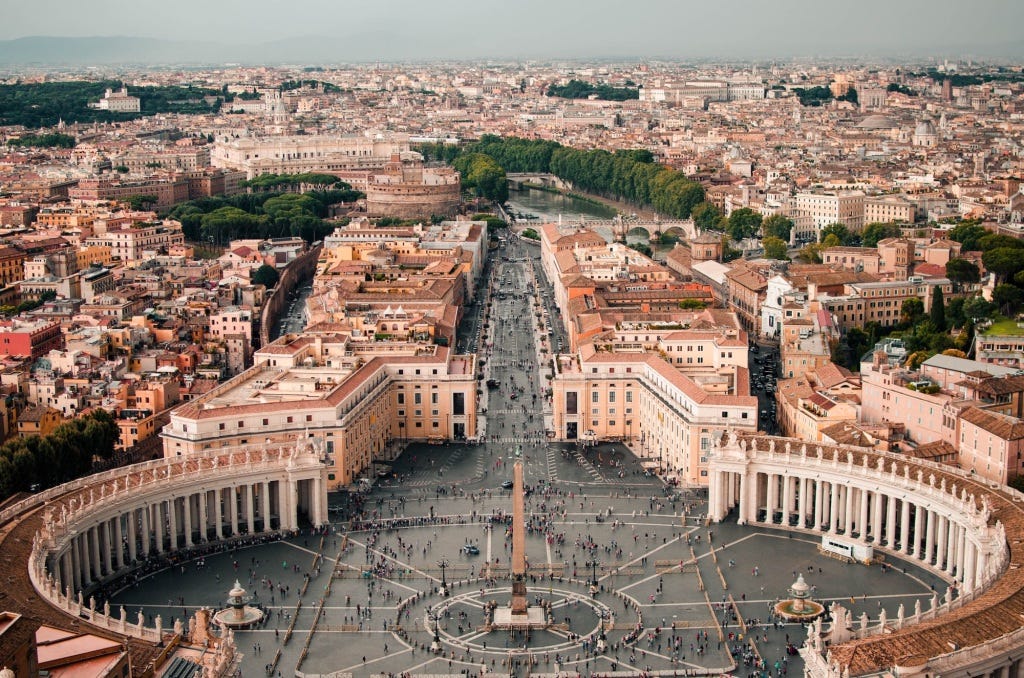
One of the most persistent criticisms of the Catholic Church is its supposed vast wealth. Many ask, why doesn’t the Vatican sell everything and distribute it to the poor? On the surface, the idea may seem logical — after all, the Vatican houses priceless artworks, magnificent cathedrals, and cardinals who wear elaborate vestments. But this criticism stems from a superficial understanding of what the Church’s “wealth” actually consists of and how it operates globally.
The Vatican’s Art and Heritage: A Treasury for Humanity, Not a Fortune
When people speak of the Vatican’s riches, they often think of Michelangelo’s Sistine Chapel, Bernini’s sculptures, or Raphael’s frescoes. However, these masterpieces are not financial assets that can be liquidated at will. They are not owned in the same way a corporation owns its assets. Rather, they belong to humanity and are preserved as part of the Church’s mission to safeguard cultural and spiritual heritage.
Selling these works of art would not only be impractical but also counterproductive. Who would buy the Pietà or the Sistine Chapel? Would they end up in private collections, inaccessible to the public? The Vatican acts as a guardian of these treasures, ensuring they remain available to people from all over the world. Expecting the Church to sell its artistic heritage to finance short-term relief efforts is as misguided as demanding that museums sell their entire collections to fund social programs.
Moreover, the construction of grand cathedrals and churches throughout history was never intended as an expression of luxury but as a reflection of divine beauty and a space for worship. The goal was not to amass wealth but to create sacred spaces that elevate the human spirit.
The Real Investment: The Church’s Humanitarian Work
Beyond its artistic and architectural legacy, the Church’s true wealth lies in its global presence among the poorest and most vulnerable. Across the world, Catholic organizations run schools, hospitals, orphanages, and shelters.
A clear example is Fe y Alegría, an initiative that has provided education in impoverished areas of Latin America, including Venezuela, where it has reached communities that neither government agencies nor private institutions have cared for. In many cases, Catholic priests and religious orders are the only ones bringing education and opportunity to those in desperate situations.
This is a reality that repeats itself worldwide: in slums, war zones, and remote areas, Catholic missionaries, religious orders, and laypeople are actively working to support those in need. The Church doesn’t just provide immediate aid but also long-term solutions — building schools, creating rehabilitation programs, assisting prisoners, and offering higher education opportunities to break cycles of poverty.
The Social Doctrine of the Church: A Commitment to the Poor
The Church is not just a charitable institution; it has a structured social doctrine that informs its commitment to justice, human dignity, and economic ethics. While the Vatican does manage funds — just like any state must — it channels much of its resources into humanitarian and educational projects.
It is also important to acknowledge that, like any institution, the Church has had corrupt individuals in its history. Some popes and clergy members have succumbed to greed, but these are exceptions. For every corrupt figure, there are hundreds of St. Francises, thousands of Mother Teresas, and countless unnamed priests, nuns, and laypeople working tirelessly to care for the abandoned, the sick, and the persecuted.
The Forgotten Sacrifice: Martyrs of the Church
One aspect rarely acknowledged by critics is the cost of this humanitarian work. Many priests, nuns, and Catholic volunteers have been killed in conflict zones, persecuted for their faith, or imprisoned for helping the vulnerable. In places like the Congo, Nigeria, and the Middle East, Church workers risk their lives to aid the suffering.
The Church does not ask about political affiliations, religious beliefs, or backgrounds before offering assistance. It simply helps because that is the radical love Christ calls for — an unconditional love that is lived out daily in missions, hospitals, and refugee camps.
Beyond Superficial Criticism
The accusation that the Vatican hoards wealth while ignoring the suffering of the world does not hold up to serious scrutiny. The Church is not a multinational corporation amassing profits; it is a global institution dedicated to faith, charity, and education. While it maintains a small independent state (the Vatican), it uses its resources to sustain a mission that reaches the most neglected areas of the world.
The real question should not be why doesn’t the Church sell its treasures? but rather why do so many critics ignore the immense work the Church does for the poor? While some focus on the external appearance of bishops’ robes or the splendor of cathedrals, they overlook the countless Catholic-run hospitals, orphanages, schools, and shelters that provide hope and dignity to millions.
The true wealth of the Church is not in its art or vestments but in its unwavering commitment to serving the least among us — a mission it has carried forward for over two thousand years.
It Is Simplistic to Say Otherwise
It is overly simplistic to claim that the Vatican could solve global poverty by liquidating its assets. This argument relies on a misunderstanding of what the Church’s “wealth” actually consists of, how its resources are used, and the nature of economic realities.
1. The Vatican’s Assets Are Not Liquid
The Church’s artistic and architectural treasures are not stockpiles of cash that can be easily distributed. Selling the Sistine Chapel or St. Peter’s Basilica would not only be logistically impossible but also futile — such works belong to humanity, not to a private entity. If sold, they would likely end up in the hands of private collectors rather than serving any meaningful social cause.
2. One-Time Charity Does Not Solve Poverty
Even if the Vatican were to auction off its treasures, the proceeds would be a temporary fix, not a structural solution. The underlying causes of poverty — lack of education, systemic corruption, broken institutions — would remain. The Church, through its schools, hospitals, and charities, focuses on long-term assistance, which actually helps people escape poverty rather than offering short-lived relief.
3. The Church’s Global Charitable Network Already Operates on a Massive Scale
The Catholic Church is one of the world’s largest providers of healthcare and education, often in areas where governments have failed. Organizations like Fe y Alegría in Latin America, Catholic Relief Services, and countless missionary initiatives offer direct aid to the most vulnerable. The Church is already redistributing resources, just not in the simplistic way critics demand.
4. The Vatican Functions as a Sovereign State
Like any government, the Vatican requires operational funds to maintain diplomatic relations, security, and administration. Expecting it to function without resources would be like asking a nation to dissolve itself while still carrying out its responsibilities.
The real issue is not about selling art or vestments but about ensuring that resources are used effectively for long-term humanitarian impact. The Catholic Church, despite its flaws, has done more to alleviate suffering than most institutions in history, not through short-sighted wealth redistribution, but through sustained efforts in education, healthcare, and social justice.
The Vatican and the Fascination with Mystery: Between Myth and Reality
Beyond its artistic and humanitarian legacy, the Vatican is often at the center of speculation, myths, and conspiracy theories. People are naturally drawn to secrecy, and the idea that the Church — one of the oldest institutions in the world — holds hidden truths only adds fuel to the fire. If you want to write a bestselling novel, one of the surest ways is to weave a story about Vatican mysteries: secret conclaves, forbidden documents in the Vatican Archives, or even the murder of a poet entangled in dark, ecclesiastical intrigue.
This fascination is not just about religion; it is about the allure of what seems untouchable. Governments, corporations, and intelligence agencies all have secrets, but few inspire the same sense of awe and curiosity as the Vatican. The Church, with its long history, rich traditions, and global influence, is a perfect breeding ground for both genuine historical intrigue and wild speculation.
From Dan Brown’s Angels & Demons to old theories about suppressed gospels and hidden relics, the idea that the Vatican controls knowledge that could “change the world” persists in popular culture. Many people assume that behind the grand walls of St. Peter’s Basilica, there must be truths too powerful for the world to handle.
The reality, however, is less sensational but far more compelling. The Vatican is not a monolithic entity hiding supernatural secrets; it is an institution composed of humans — brilliant, flawed, devoted, and sometimes corrupt. It has endured wars, schisms, and crises, not because of secret knowledge, but because of its deep theological foundation and its role in guiding billions of believers.
Even the real Vatican mysteries — like unsolved deaths, internal power struggles, and the complexities of conclaves — are not unlike those found in any institution of significant power. The difference is that, because of the Vatican’s religious significance, these stories carry an added weight, an almost mythological aura.
Why the World Seeks Mysteries in the Church
The desire to uncover Vatican secrets often reflects a deeper spiritual or existential longing. If the Church were simply an outdated institution with no relevance, it wouldn’t attract so much scrutiny. The persistence of these conspiracies suggests that, even among skeptics, there is an acknowledgment — conscious or not — that the Church matters.
It is easier for some to believe that the Vatican is hiding world-shattering truths than to engage with what the Church actually teaches. A hidden gospel that “contradicts everything” is more thrilling than the challenge of living a moral and spiritual life. The idea of a pope secretly controlling world affairs is more exciting than the reality of a pope struggling with the same geopolitical tensions and humanitarian crises as other world leaders.
Myth vs. Mission: The True Riches of the Church
This constant fascination with Vatican conspiracies often overshadows the real work of the Church. While some imagine underground vaults filled with hidden knowledge, the Church is actually present in places of immense suffering — war zones, famine-stricken regions, and impoverished communities.
While conspiracy theorists speculate about secret conclaves, Catholic missionaries are in the trenches, teaching, healing, and serving those the world has forgotten. This is the true “secret” of the Church: not hidden wealth, not dark knowledge, but an unbroken mission of love and sacrifice.
So, if one were to write a novel about Vatican mysteries, the real intrigue would not be in some imagined hidden manuscript, but in the reality of how the Church has survived centuries of turmoil. The true mystery is not what the Vatican hides but what has allowed it to endure: a faith that continues, against all odds, to shape history.
Beyond Superficial Criticism
The accusation that the Vatican hoards wealth while ignoring the suffering of the world does not hold up to serious scrutiny. The Church is not a multinational corporation amassing profits; it is a global institution dedicated to faith, charity, and education. While it maintains a small independent state (the Vatican), it uses its resources to sustain a mission that reaches the most neglected areas of the world.
The real question should not be why doesn’t the Church sell its treasures? but rather why do so many critics ignore the immense work the Church does for the poor? While some focus on the external appearance of bishops’ robes or the splendor of cathedrals, they overlook the countless Catholic-run hospitals, orphanages, schools, and shelters providing millions hope and dignity.
The true wealth of the Church is not in its art or vestments but in its unwavering commitment to serving the least among us — a mission it has carried forward for over two thousand years.